
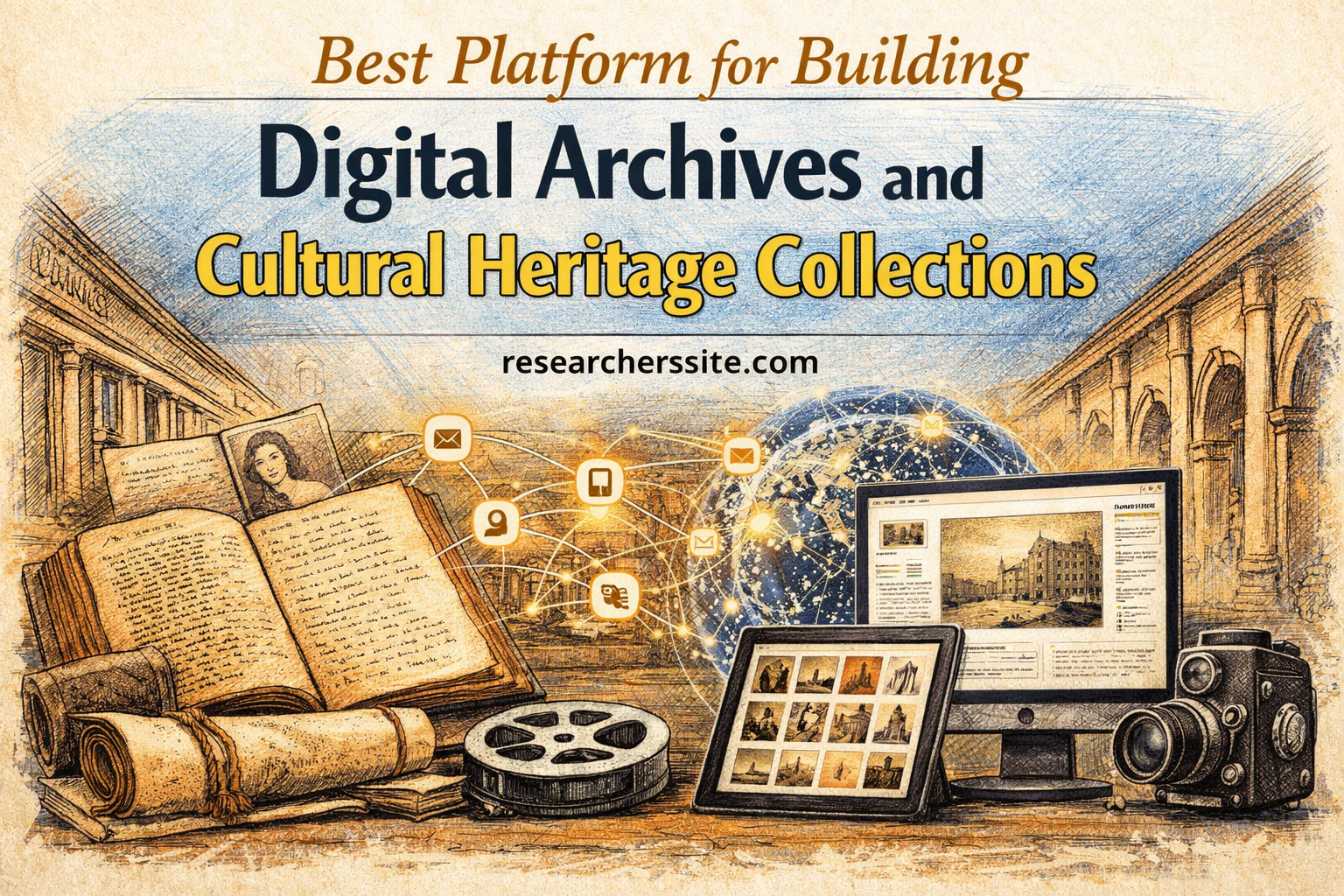
In this blog, we explore how a dedicated digital publishing platform can transform the way scholars preserve, describe, and share cultural heritage collections with clarity and purpose. This blog post explores Omeka, one of the best platforms for building digital archives and cultural heritage collections.
The Growing Need for Digital Archives in Cultural Heritage
Across libraries, museums, and research institutions, valuable materials are at risk of being lost, fragmented, or overlooked. Manuscripts age, photographs deteriorate, and oral histories fade when not preserved properly. The digital turn in humanities research has created new opportunities, but it has also introduced new responsibilities.
Digital archives are no longer optional. They are essential tools for preserving knowledge and making it accessible to wider audiences. However, building a meaningful archive is not simply about uploading files. It requires thoughtful organization, structured description, and a clear approach to public access.
This is where a purpose-built platform for digital archives becomes crucial. It allows scholars and institutions to go beyond storage and create collections that are both usable and meaningful.
What Makes a Platform Ideal for Digital Archives and Cultural Heritage Collections
Not all web tools are suitable for cultural heritage work. A strong digital archive platform must support preservation, description, and access in equal measure. These three functions define the success of any archive.
Preservation ensures that digital objects remain safe and usable over time. Description gives those objects meaning through metadata. Public access allows audiences to discover and engage with the materials.
An effective platform integrates all three without requiring advanced technical skills. It should allow users to manage digital objects, attach structured metadata, organize collections, and present them through public-facing exhibits.
For researchers and faculty, the best platform is one that supports both academic rigor and ease of use.
A Platform Designed for Scholars, Not Just Developers
One of the most valuable aspects of modern digital archive platforms is their accessibility. Scholars should not need deep programming knowledge to build and share collections. Instead, the platform should support intuitive workflows that align with research practices.
This type of platform allows users to create sites, upload materials, and organize content through a simple interface. It reduces technical barriers and enables researchers to focus on interpretation, curation, and storytelling.
For PhD scholars and faculty members, this is especially important. Time is limited, and research priorities are demanding. A platform that simplifies technical processes allows scholars to concentrate on their core work.
From Digital Objects to Structured Knowledge
At the heart of any archive are its items. Each item represents a digital object such as a photograph, manuscript, audio recording, or video. However, an item gains value only when it is properly described.
This is where metadata plays a central role. Metadata provides information about each object, including its title, creator, date, and context. Without metadata, a digital file remains isolated and difficult to interpret.
A strong platform uses standardized metadata systems to ensure consistency. This allows collections to be searchable and meaningful. It also enables interoperability, meaning that collections can connect with other archives and discovery systems.
For scholars, this transforms a collection from a set of files into a structured body of knowledge.
Understanding the Role of Dublin Core Metadata
One of the most widely used metadata standards in digital humanities is Dublin Core. It provides a simple yet effective framework for describing digital objects.
Fields such as Title, Creator, Date, Description, Source, and Rights help define each item clearly. These fields create a common language that allows different archives to communicate with each other.
This standardization is critical for discoverability. When metadata follows recognized structures, collections can be indexed by search engines and integrated into broader research networks.
For cultural heritage collections, this ensures that materials do not remain hidden. Instead, they become part of a larger scholarly ecosystem.
Organizing Cultural Heritage Collections for Clarity and Meaning
As archives grow, organization becomes essential. A well-structured collection allows users to navigate materials with ease and understand their relationships.
Grouping items into collections provides this structure. Collections may be based on themes, time periods, regions, or formats. For example, an archive may include collections of historical newspapers, literary manuscripts, or oral history recordings.
This organization does more than improve usability. It creates context. When items are grouped thoughtfully, users can see patterns, connections, and narratives that would otherwise remain unclear.
For researchers, this adds depth to the archive. For general audiences, it improves accessibility and engagement.
Creating Digital Exhibitions That Tell Stories
A powerful digital archive does more than store and organize materials. It tells stories. This is where digital exhibitions play a vital role.
Through exhibitions, scholars can connect individual items into a larger narrative. A set of photographs can become a visual history of a community. A collection of letters can reveal personal experiences during a historical event.
Digital exhibitions combine objects with interpretation. They guide users through curated pathways and highlight key themes. This transforms the archive into an interactive and educational experience.
For digital humanities projects, this storytelling aspect is essential. It bridges the gap between academic research and public understanding.
How to Build Digital Archives and Cultural Heritage Collections with Omeka (Step-by-Step Guide)
Creating digital archives and preserving cultural heritage collections has become essential in the digital age. Whether you are a researcher, librarian, or institution, having a structured way to store and showcase historical materials is crucial.
One of the best tools available today is Omeka, an open-source platform designed specifically for building digital archives and creating media-rich online exhibits. In this guide, you’ll learn how to build your own digital archive step by step using Omeka.
Why Use Omeka for Digital Archives and Cultural Heritage Collections ?
Omeka allows users to create professional digital collections without requiring advanced technical skills.
Key benefits include:
- Open-source and free to use
- Designed for digital archives and cultural heritage collections
- Supports metadata standards like Dublin Core
- Enables storytelling through online exhibits
Step-by-Step Guide to Building a Digital Archive with Omeka
Step #1: Create an Omeka Site
The process begins with setting up your archive site using Omeka. You can choose between Omeka Classic and Omeka S depending on your requirements.
- Omeka Classic: Best for beginners and digital exhibitions
- Omeka S: Suitable for larger, multi-site institutional projects
👉 Visit the official website: https://omeka.org
Starting with Omeka Classic is recommended if you are new to digital archiving.
Step #2: Add Items to Your Archive
After setting up your site, the next step is to upload items. Each item represents a digital object in your archive.
Examples of items include:
- Photographs
- Manuscripts
- Historical documents
- Audio recordings
- Videos
Upload your file and assign a clear and descriptive title. This helps in identification and improves search visibility.
Step #3: Add Metadata (Dublin Core)
Metadata is the backbone of any digital archive. Omeka uses Dublin Core metadata standards, which include:
- Title
- Creator
- Date
- Description
- Source
- Rights
Accurate metadata improves search engine visibility (SEO), increases the discoverability of your archive, and enhances academic usability by making the content more organized, accessible, and meaningful for users. Well-structured metadata ensures your content is meaningful and accessible.
Step # 4: Organize Items into Collections
To make your archive user-friendly, group related items into collections.
Examples of collections:
- Historical newspapers
- Political speeches
- Literary manuscripts
Collections provide structure and help users navigate your digital archive efficiently.
Step # 5: Create Digital Exhibits
This is where your archive becomes truly engaging. Omeka allows you to create digital exhibits that combine:
- Archival objects
- Contextual interpretation
- Storytelling
These exhibits transform your archive into a public-facing cultural heritage project and makes it informative and visually appealing.
Building a digital archive is more than just uploading files it’s about preserving knowledge and telling meaningful stories. With Omeka, you can create a professional and accessible digital collection without needing advanced technical expertise.
By following this step-by-step guide, you can build your own digital archive and cultural heritage collection efficiently and effectively.
Enhancing Public Access and Discoverability
Public access is a defining feature of digital archives. A well-designed platform ensures that collections are accessible to global audiences.
Structured metadata improves search engine visibility. Clear organization enhances user experience. Together, these elements make the archive discoverable and usable.
For institutions, this increases outreach and impact, while for researchers, it expands the audience for their work.
Challenges and Practical Considerations
While digital archive platforms offer many benefits, they also require careful planning. Metadata must be accurate and consistent. Collections must be organized thoughtfully. Long-term maintenance must be considered.
Sustainability is an important factor. Digital archives need regular updates and support to remain accessible. Institutions must plan for this from the beginning.
Despite these challenges, the advantages of structured digital archiving are significant. With the right approach, these platforms can support both preservation and innovation.
Conclusion: Building Meaningful Digital Archives for the Future
The best platform for building digital archives and cultural heritage collections is one that balances simplicity with scholarly depth. It should allow users to preserve materials, describe them clearly, and share them with the public in meaningful ways.
By supporting structured metadata, intuitive organization, and narrative exhibitions, such platforms enable researchers to transform scattered materials into coherent and accessible collections.
Looking ahead, the importance of digital archives will continue to grow. As more cultural materials are digitized, the need for platforms that support preservation and access will become even more urgent.
For researchers, faculty, and PhD scholars, the opportunity is clear. Digital archives are not just repositories. They are spaces where knowledge is preserved, interpreted, and shared.
The future of cultural heritage depends on how well we build these spaces today.